Introduction
If you have ever studied networking, even at a basic level, you have probably come across the term “Token Ring.” It sounds a little mysterious at first, almost like something out of a fantasy story, but in reality, it is one of the oldest and most important networking technologies in computer history.
In this article, we are going to break down what a What Is a Token Ring is, how it works, why it mattered, and why it eventually faded away. We will keep the language simple so that even someone with no technical background can follow along easily.
What Is a Token Ring?
What Is a Token Ring is a type of local area network, or LAN, where all the connected computers are arranged in a circular or ring-shaped layout. Instead of every computer trying to send data whenever it wants, which can cause a lot of confusion and data collisions, the network uses a small piece of data called a “token” to control who gets to send information at any given moment.
Only the computer holding the token is allowed to transmit data, and once it is done, it passes the token to the next computer in line. This simple but clever idea helped avoid the chaos that often happened in other types of networks during the early days of computing.
The Origin and History of Token Ring Networks
Token Ring technology was developed by IBM in the early 1980s, and it quickly became one of the most popular alternatives to Ethernet during that time. Companies loved it because it offered a predictable and orderly way of managing network traffic, especially in offices where dozens of computers needed to share the same connection.
For many years, Token Ring was seen as a serious competitor to Ethernet, and large corporations invested heavily in building their internal networks around this technology. It was not just a passing trend either; it was standardized officially under IEEE 802.5, which gave it long-term credibility in the tech world.
How Does a Token Ring Network Actually Work?
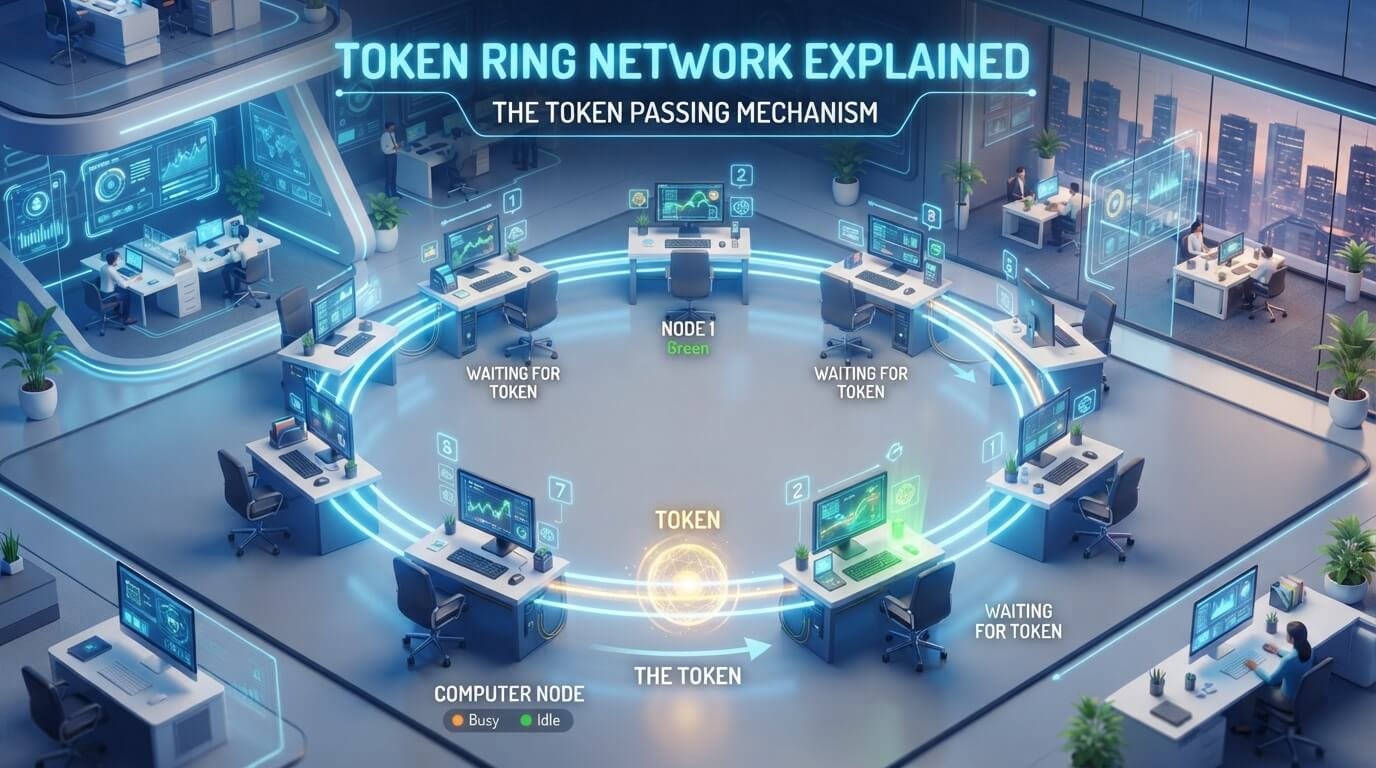
To understand how a token ring network works, imagine a group of people sitting in a circle, and there is only one microphone that gets passed around. Only the person holding the microphone can speak, and once they are done talking, they hand it to the next person in the circle. Nobody else is allowed to interrupt or speak out of turn. This is exactly how a What Is a Token Ring network operates.
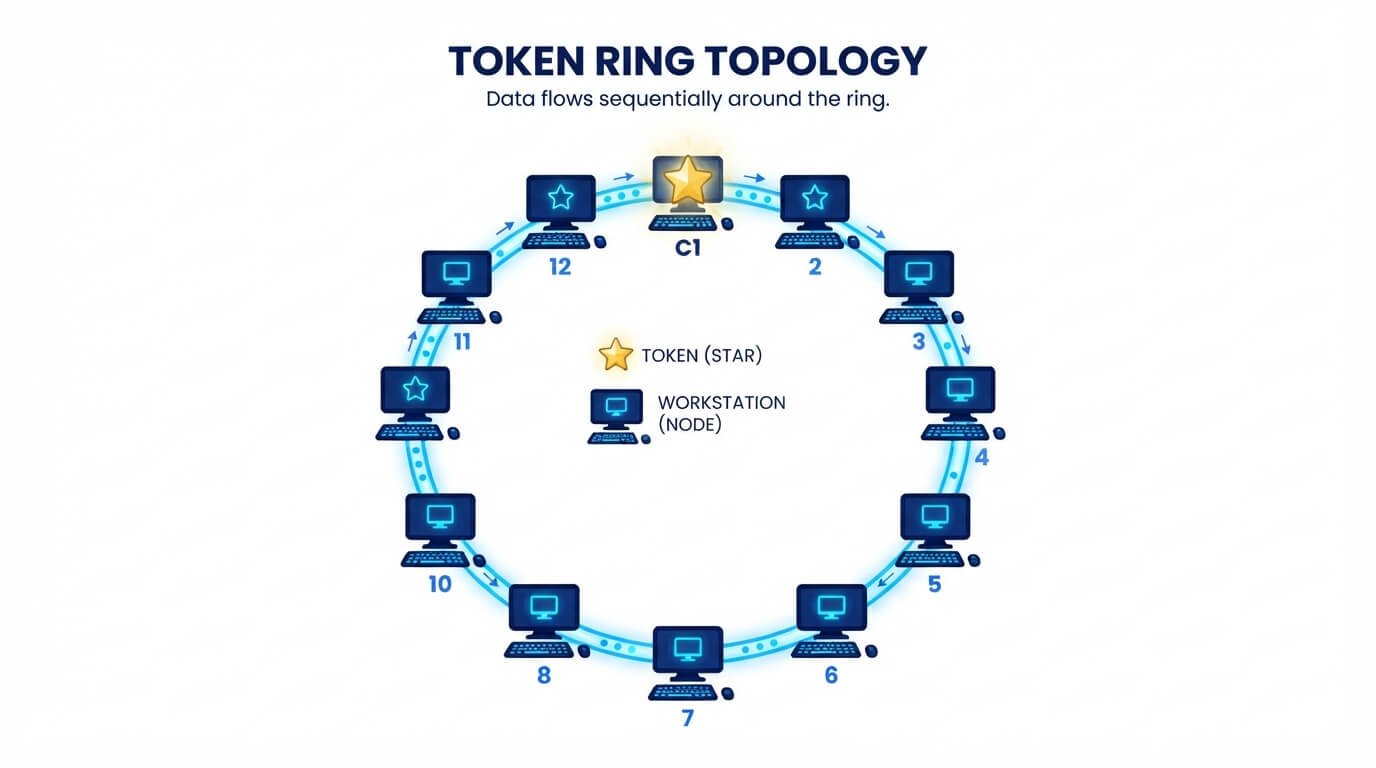
The token travels from one device to another around the ring, and whichever device has the token gets the temporary right to send data across the network. This process repeats continuously, ensuring that every device eventually gets a chance to communicate.
What Exactly Is a Token in Networking?
The token itself is a small, special data packet that does not contain any user information. Its only job is to give permission to a device to transmit data onto the network. Think of it as a hall pass in school.
You cannot walk around the hallways during class time unless you are holding that pass. Similarly, a computer on a token ring network cannot send data unless it physically holds the token. Once the transmission is complete, the token is released back into the ring so the next machine can use it.
The Physical and Logical Topology of Token Ring
One interesting thing about token ring networks is that while they are logically arranged in a ring, meaning data flows in a circular path, the actual physical wiring often used a star-shaped layout.
This was made possible through a device called a Multistation Access Unit, or MAU, which connected all the individual computers and simulated the ring internally. So even though it looked like a star from the outside, the data still moved in a circular, ring-like pattern internally. This clever design made installation and troubleshooting a lot easier for network administrators.
Token Ring vs Ethernet: The Classic Rivalry
During the 1980s and early 1990s, there was a genuine battle happening in the networking world between Token Ring and Ethernet. Ethernet used a different method called CSMA/CD, where devices would just try sending data whenever they wanted, and if two devices happened to send data at the same time, a collision would occur, and both devices would have to wait and try again. Token Ring, on the other hand, avoided this entire problem because only one device could talk at a time.
This made Token Ring more predictable and efficient in smaller, heavily used networks, while Ethernet was simpler and cheaper to set up, which eventually gave it the upper hand in the long run.
Advantages of Token Ring Networks
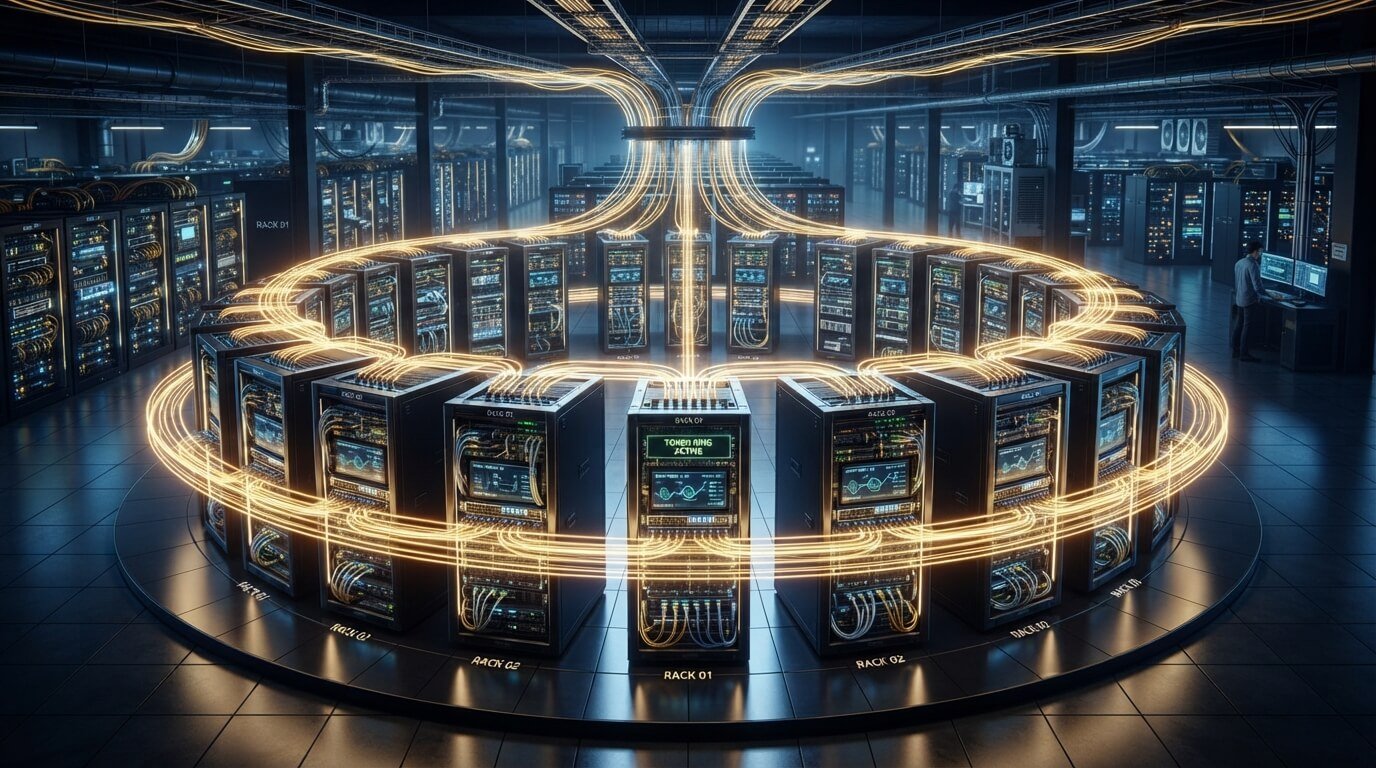
One of the biggest strengths of a token ring network is that it avoids data collisions completely, since only one device can transmit at any given time. This made the network highly predictable, especially in environments where consistent performance mattered a lot, such as banks or factories. Another advantage was fairness.
Every single device on the network eventually got a turn to use the token, so no one computer could dominate the entire bandwidth. This made token ring networks especially reliable during periods of heavy network traffic, which was a big deal for businesses back then.
Disadvantages That Led to Its Decline
Despite its strengths, Token Ring had some serious drawbacks that eventually caused it to lose popularity. First, the hardware required for Token Ring, including special network cards and MAUs, was significantly more expensive than standard Ethernet equipment.
Second, if one device on the ring failed or malfunctioned, it could potentially disrupt the entire network, although later versions tried to fix this issue with better fault tolerance. Third, as Ethernet technology improved and became faster and cheaper, businesses saw little reason to keep investing in the more costly Token Ring infrastructure.
Understanding the IEEE 802.5 Standard
The IEEE 802.5 standard is the official technical specification that governs how Token Ring networks operate. It defines everything from the frame format, meaning how data is packaged for transmission, to the rules around token passing and error handling.
This standardization was important because it allowed different manufacturers to build Token Ring compatible equipment that could all work together smoothly. Without this kind of standard, the technology would have been much harder to adopt on a wide scale across different companies and industries.
The Token Passing Mechanism Explained in Detail
Let’s dive a little deeper into how the token passing process actually works step by step. When the network starts up, a token is created and begins circulating the ring. As it reaches each device, that device checks whether it has any data waiting to be sent. If it does not, it simply passes the token along to the next device.
If it does have data, it attaches that data to the token, converting it into what is called a “data frame,” and sends it around the ring. The data frame travels around until it reaches its intended destination, where the receiving device copies the information and marks the frame as received before letting it continue around the ring back to the original sender.
Key Components That Make Up a Token Ring Network
A functioning token ring network typically requires several key components working together. These include the network interface cards installed inside each computer, the cabling that physically connects everything together, and the Multistation Access Unit that manages the ring’s structure.
Each of these pieces plays a specific role, and if even one part fails, it can affect the performance or stability of the entire network. This is why network administrators back in the day had to be extremely careful when designing and maintaining these systems.
Real-World Applications of Token Ring Technology
Token Ring networks were widely used in corporate office environments, particularly those that relied on IBM mainframe systems, since the technology was a natural fit with IBM’s broader product ecosystem.
Banks, insurance companies, and government offices were among the industries that adopted What Is a Token Ring extensively during its peak years. The technology’s reliability and orderly data handling made it especially attractive for organizations that could not afford network downtime or unpredictable performance issues.
Why Token Ring Eventually Became Obsolete
As the 1990s progressed, Ethernet technology made huge leaps forward, introducing faster speeds at a fraction of the cost compared to Token Ring equipment. Businesses naturally gravitated toward the cheaper and increasingly faster Ethernet option, especially as switched Ethernet eliminated many of the collision problems that had originally given Token Ring its advantage. By the early 2000s, Token Ring had largely disappeared from mainstream use, replaced almost entirely by Ethernet-based networks that we still use in some form today.
Token Ring vs Star Topology: Clearing the Confusion
Many people get confused between token ring as a technology and star topology as a physical layout, so it is worth clarifying the difference here. Star topology simply refers to how the cables are physically arranged, with all devices connecting to a central hub or switch.
Token Ring, as we mentioned earlier, often used a physical star layout through the MAU device, even though the data logically flowed in a ring pattern. So technically, a network can look like a star on the outside while still functioning as a token ring on the inside.
Is Token Ring Still Used Today?
In modern networking environments, Token Ring is essentially considered a legacy technology and is rarely, if ever, used in new network installations. Almost all businesses and homes today rely on Ethernet or wireless networking standards instead.
However, understanding Token Ring remains valuable for networking students and IT professionals because it teaches important foundational concepts about how data can be managed and controlled across a shared network, ideas that still influence network design principles even in modern systems.
Frequently Asked Questions About Token Ring
People often ask whether Token Ring is faster than Ethernet, and the honest answer is that it depends on the specific version and network conditions, though modern Ethernet has long since surpassed Token Ring in raw speed. Another common question is whether Token Ring can still be purchased today, and while some legacy hardware might exist in older facilities, it is not commercially manufactured or sold anymore.
Lastly, people sometimes wonder if Token Ring concepts are used anywhere else, and interestingly, similar token-passing ideas appear in other technologies, such as certain industrial control systems that still value predictable, collision-free communication.
Final Thoughts
Token Ring may no longer be part of our everyday networking world, but its impact on the history of computer networking cannot be ignored. It introduced a smart and orderly way of managing data traffic that solved real problems businesses faced during the early days of local area networking.
While Ethernet ultimately won the battle for dominance due to its lower cost and faster development, the core ideas behind Token Ring, such as fairness and collision avoidance, still echo throughout networking theory today. Understanding this piece of technology gives us a deeper appreciation for how far networking has come and reminds us that even outdated technologies often laid the groundwork for the tools we rely on every single day.