Introduction
If you have spent any time online in the last couple of years, chances are you have heard a song that sounded completely professional, only to find out later that it was created entirely by artificial intelligence. In most cases, that song was made using Suno, the tool that has quietly become the most talked-about name in AI-generated music.
In this article, we will walk through exactly what Suno is, how it works, why so many people are using it, and what you should know before you try it yourself. Everything here is explained in plain, simple language so that even someone who has never touched a music app before can follow along.
What Is Suno AI Music Generator?
Suno is an artificial intelligence platform that turns a simple text description, a short audio clip, or even your own singing voice into a complete, original song. That means full lyrics, vocals, instruments, and a finished mix, all generated automatically in under a minute in most cases.
Instead of giving you loose pieces of music that you then have to arrange yourself, suno ai music generator hands you a finished track that sounds like it came out of a real recording studio. This is what makes it so different from older, more robotic-sounding music generation tools that came before it.
How Did Suno Become So Popular?
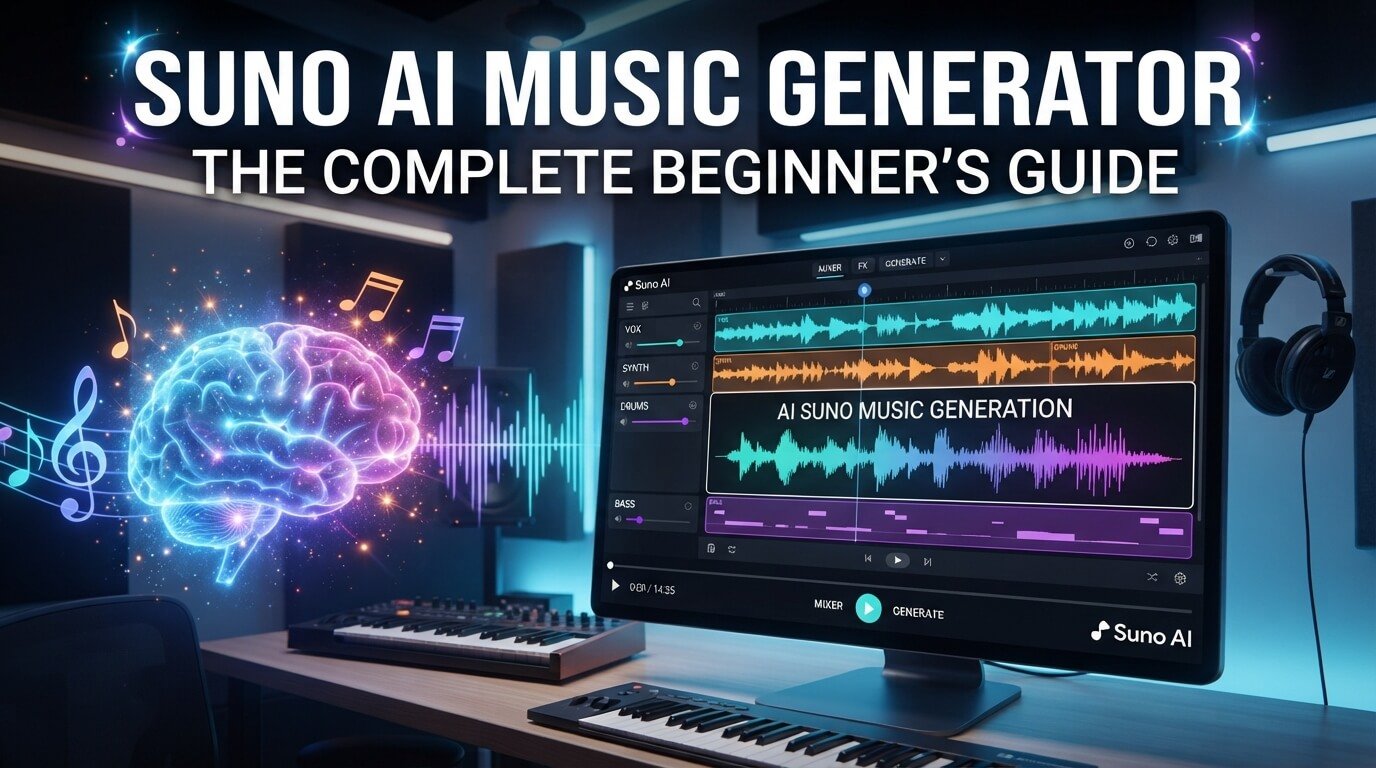
Suno launched its earliest version back in 2024, and within a short time, it grew from a niche experiment into a mainstream sensation. By 2026, the platform had grown to well over 100 million users worldwide, with millions of them paying for premium features. That kind of growth is rare for any software product, let alone one built around something as creative and personal as music. Part of the reason for this explosive growth is simple curiosity.
People wanted to see whether a machine could really write a convincing song, and once they tried it, many of them got hooked on the experience of creating music without needing any traditional musical training.
How Does Suno Actually Work?
At its core, suno ai music generator relies on a type of artificial intelligence model that has been trained to understand the relationship between words, musical patterns, and sound. When you type a prompt describing the kind of song you want, the system predicts what melody, rhythm, instrumentation, and vocal style would best match that description, and then generates the actual audio from scratch.
It is not stitching together pre-recorded samples like older software might. Instead, it is generating brand new audio based on patterns it learned during training, which is why every song it creates feels unique rather than like a copy-paste job.
The Two Main Ways to Create Music on Suno
Suno generally offers two different approaches for creating a song, depending on how much control you want. The simple mode only needs a short sentence describing the mood, genre, or theme of the song you want, and the system fills in the rest on its own.
The more advanced mode allows you to write your own lyrics, choose a specific genre or style tag, and guide the vocal delivery, giving you much more control over the final result. Beginners usually start with the simple mode just to see what the tool can do, while more experienced users tend to move toward the advanced mode as they get comfortable with how prompting works.
Suno’s Model Versions and How They Improved Over Time
One of the more impressive things about suno ai music generator is how quickly the underlying technology has improved. Starting from its early versions in 2024, the platform has gone through several major upgrades, each one bringing noticeably better vocal realism, richer instrumentation, and longer song lengths. By early 2026, the flagship version had reached a point where casual listeners often could not tell the difference between an AI-generated vocal and a real human singer.
Later in 2026, an even newer version arrived that was trained using officially licensed music catalogs from major record labels, marking an important shift toward a more legally sound way of building these AI models.
Suno Studio: Turning Suno Into a Real Music Workstation
What started as a simple text-to-song tool eventually grew into something much bigger. Suno introduced a browser-based studio environment that lets users edit their generated tracks the way a professional producer would edit a real recording. This includes separating a song into individual instrument tracks, known as stems, adjusting timing, removing unwanted effects, and even recording new vocal or instrumental parts directly on top of the AI-generated foundation.
This turned Suno from a simple novelty generator into something closer to a full digital audio workstation, which is a huge deal for anyone serious about music production.
Voice Cloning and Personalization Features
More recent updates to Suno introduced the ability for users to upload or record their own voice, allowing the AI to generate songs that sound like they are being sung in that specific voice. Alongside this, Suno added a feature that lets users train a personalized version of the model using their own previous tracks, so the output starts to reflect their own unique musical style over time.
There is also a built-in personalization system that quietly learns what kind of music a user tends to enjoy or create, and gradually tailors future suggestions and generations to match that taste.
Who Is Suno Actually Built For?
suno ai music generator was designed with a wide range of users in mind, not just professional musicians. Complete beginners who have never written a song before can use it to explore melody and lyrics for the first time. Songwriters who are good with words but struggle with composing music can use it to bring their lyrics to life instantly.
Content creators who need background music for videos, podcasts, or social media clips can generate royalty-free tracks in minutes instead of searching through stock music libraries. Even experienced producers are using it as a fast way to sketch out song ideas before refining them further in traditional software.
Suno’s Free Plan Versus Paid Plans
Suno offers a free tier that gives new users daily credits to experiment with the platform, generating roughly a handful of songs per day without needing to enter any payment information. This is a great way to understand how the tool works before committing any money.
The paid plans unlock significantly more generation credits, access to the newest and most advanced model versions, commercial usage rights for the songs you create, and access to extra tools like the editing studio and voice cloning features. For most casual users, the lower-priced paid tier tends to offer the best balance between cost and usefulness, while the higher tier is really only worth it for people who plan to use the full studio editing suite regularly.
The Legal and Copyright Questions Around AI Music
As exciting as Suno is, it has not been free from controversy. Major record labels raised legal concerns about how the earlier versions of Suno’s model were trained, arguing that copyrighted music may have been used without proper permission.
This led to real lawsuits and ongoing legal disputes within the music industry. In response, Suno has since signed official licensing agreements with some major music companies, allowing artists to opt in and be compensated when their style or catalog contributes to the AI model. Because of this history, anyone using Suno for commercial projects should stay aware of the current legal landscape, since it continues to shift as new agreements and rulings come in.
Can You Actually Copyright a Suno Song?
This is one of the most common questions new users ask, and the honest answer is a bit complicated. In many regions, including the United States, a piece of music that is entirely generated by artificial intelligence with no meaningful human creative input generally cannot be copyrighted on its own.
However, if you write your own original lyrics or significantly edit and rearrange the AI-generated audio using tools like Suno Studio, you may be able to claim copyright over those specific human-made contributions. Anyone planning to release AI-assisted music commercially should read the platform’s current terms of service carefully and consider consulting a legal professional if the stakes are high.
Tips for Writing Better Prompts on Suno
Getting a great result out of suno ai music generator often comes down to how clearly you describe what you want. A useful approach is to combine several key elements into your prompt, including the genre, the mood, the tempo, the main instruments you want to hear, and the style of vocal delivery you are imagining.
Vague prompts like simply typing “a good song” tend to produce generic results, while a detailed prompt describing something like a slow, emotional acoustic ballad with soft piano and a breathy female vocal tends to produce a much more satisfying and specific outcome.
Suno Compared to Other AI Music Tools
Suno is far from the only AI music generator on the market, but it has consistently been ranked among the strongest overall options because of its balance between vocal quality, ease of use, and creative flexibility.
Some competing tools focus more heavily on instrumental textures or background music for video content, while others offer faster generation speeds but weaker vocal realism. Suno tends to stand out specifically because of how natural and emotionally convincing its vocal performances sound, which is often the hardest part of AI music generation to get right.
Common Mistakes Beginners Make With Suno
New users often make the mistake of giving up too quickly after one or two disappointing generations, without realizing that refining a prompt can make a massive difference in quality. Another common mistake is ignoring the option to generate two versions of a song at once and simply picking the first result instead of comparing both.
Some users also skip exploring the editing and stem separation tools entirely, missing out on the ability to polish a rough AI generation into something that sounds much closer to a finished, professional track.
Final Thoughts
suno ai music generator represents a genuine turning point in how music can be created, opening the door for people with no formal training to bring musical ideas to life in a matter of minutes. It is not without its controversies, particularly around copyright and the rights of original artists, and those conversations are likely to continue shaping the platform for years to come. Still, for anyone curious about experimenting with sound, writing lyrics, or simply having fun turning an idea into a full song, Suno offers one of the most accessible and genuinely impressive entry points into the world of AI-generated music available today.