Introduction
If you have ever tried to send a large voice recording over email and watched it fail, you already understand why cloud-based audio exists. Cloud-Based Audios are simply sound files that live on remote servers instead of sitting on your laptop or phone.
You upload once, and then you can play, share, or edit that file from anywhere with an internet connection. This idea sounds small, but it has quietly changed how podcasters, musicians, teachers, and everyday people handle sound. In this article, we will walk through what cloud-based audios are, why they matter, and how you can use them the smart way.
What Are Cloud-Based Audios?
At their core, cloud-based audios are audio files hosted on cloud servers rather than on a local hard drive. Think of platforms like Google Drive, Dropbox, or dedicated audio hosting tools such as SoundCloud or Podbean.
When you record a voice memo or a full podcast episode and upload it to one of these platforms, it becomes a cloud-based audio file. The file itself does not change, but where it lives and how you access it changes completely. Instead of being tied to one device, the file becomes available on your phone, your tablet, your work computer, and even a friend’s laptop, as long as they have the right link or login.
Why Cloud-Based Audios Are Changing the Game
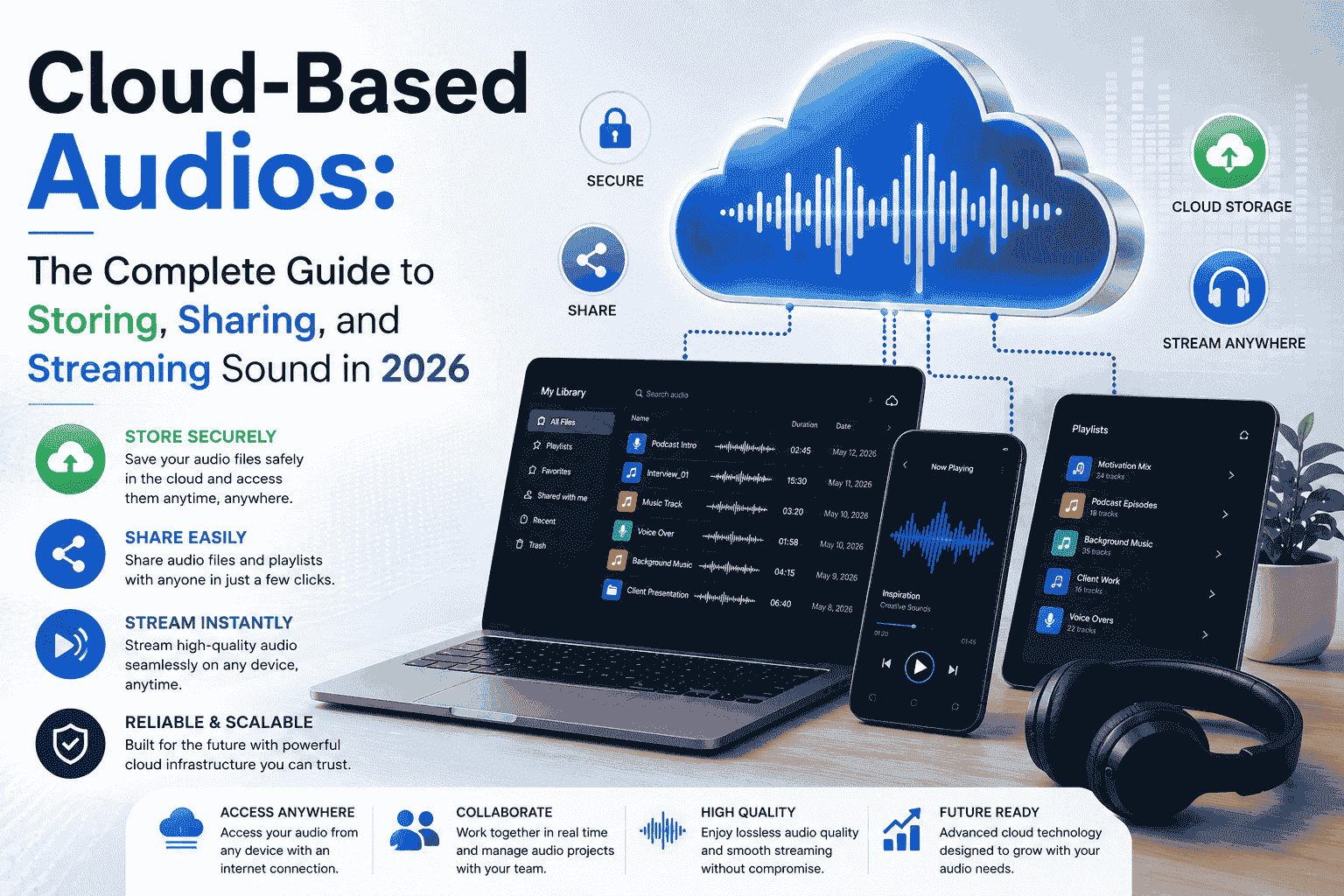
The shift toward cloud-based audios did not happen overnight, but it has picked up serious speed in the last few years. People record more audio than ever before, from voice notes to full-length interviews, and local storage simply cannot keep up. Cloud-based audios solve the storage problem, but they also solve a bigger problem: collaboration.
A band in three different cities can now work on the same track without mailing hard drives back and forth. A remote team can record a meeting and have it transcribed and shared within minutes. This is not just convenience; it is a completely different way of working with sound.
How Cloud-Based Audios Work
The technology behind cloud-based audios is easier to understand than most people expect. When you upload a sound file, it travels through the internet to a data center, where it is stored on powerful servers. These servers are built to handle huge amounts of data and keep it safe with backups.
When you or someone else wants to listen, the file streams back down to your device, often without you needing to download the whole thing first. This is similar to how video streaming works, just applied to sound. The result is fast access, smaller storage use on your own device, and the ability to reach your audio from almost anywhere.
Benefits of Cloud-Based Audios for Businesses
Businesses have quickly realized that cloud-based audios save both time and money. Customer service teams record calls and store them in the cloud so any manager can review them instantly. Marketing teams create audio ads and voiceovers that can be reviewed by clients in different time zones without sending huge files through email.
Training departments record onboarding sessions once and let every new hire stream them whenever needed. All of this reduces the need for physical storage devices and cuts down on the technical headaches that come with managing files across many computers.
Cloud-Based Audios for Content Creators
Podcasters and musicians were some of the earliest adopters of cloud-based audios, and it is easy to see why. A podcaster can record an episode, upload it to a cloud host, and have it automatically pushed out to Spotify, Apple Podcasts, and other platforms.
Musicians can share rough mixes with bandmates or producers instantly, gathering feedback in hours instead of days. This speed matters in a creative field where momentum is everything. Cloud-based audios remove the friction that used to slow creators down.
Cloud-Based Audios vs Traditional Audio Storage
Traditional audio storage means saving files on a hard drive, a USB stick, or a CD. This method feels safe because you can physically hold the device, but it comes with real risks. Hard drives fail. USB sticks get lost.
Laptops get stolen. Cloud-based audios remove much of this risk because the files are backed up automatically and stored across multiple servers, not just one device. The tradeoff is that you need a stable internet connection to access your files, which is a fair price for most people given the peace of mind it brings.
Security and Privacy in Cloud-Based Audios
A short paragraph here because this point deserves attention on its own: security is often the first worry people have about cloud-based audios, and it is a fair worry.
Most reputable cloud-based audio platforms use encryption to protect files both while they are being uploaded and while they sit in storage. This means that even if someone intercepted the data, they would not be able to read or hear it without the right key.
Good platforms also let you control who has access to each file, so you can keep a recording private or share it with only a specific group of people. It is still wise to choose well-known providers with clear privacy policies, since not every cloud service treats your data the same way.
Top Features to Look for in Cloud-Based Audios
Not every cloud-based audio platform is built the same, so it helps to know what separates a good one from an average one. Look for automatic backups, so you never lose a file even if something goes wrong on your end. Look for easy sharing options, ideally with adjustable privacy settings for each file.
Fast upload and streaming speeds matter too, especially if you work with long recordings. Some platforms also offer built-in editing tools, transcription services, and analytics that show how many times a file has been played. These extra features can save you from needing several separate tools.
Cloud-Based Audios and Remote Teams
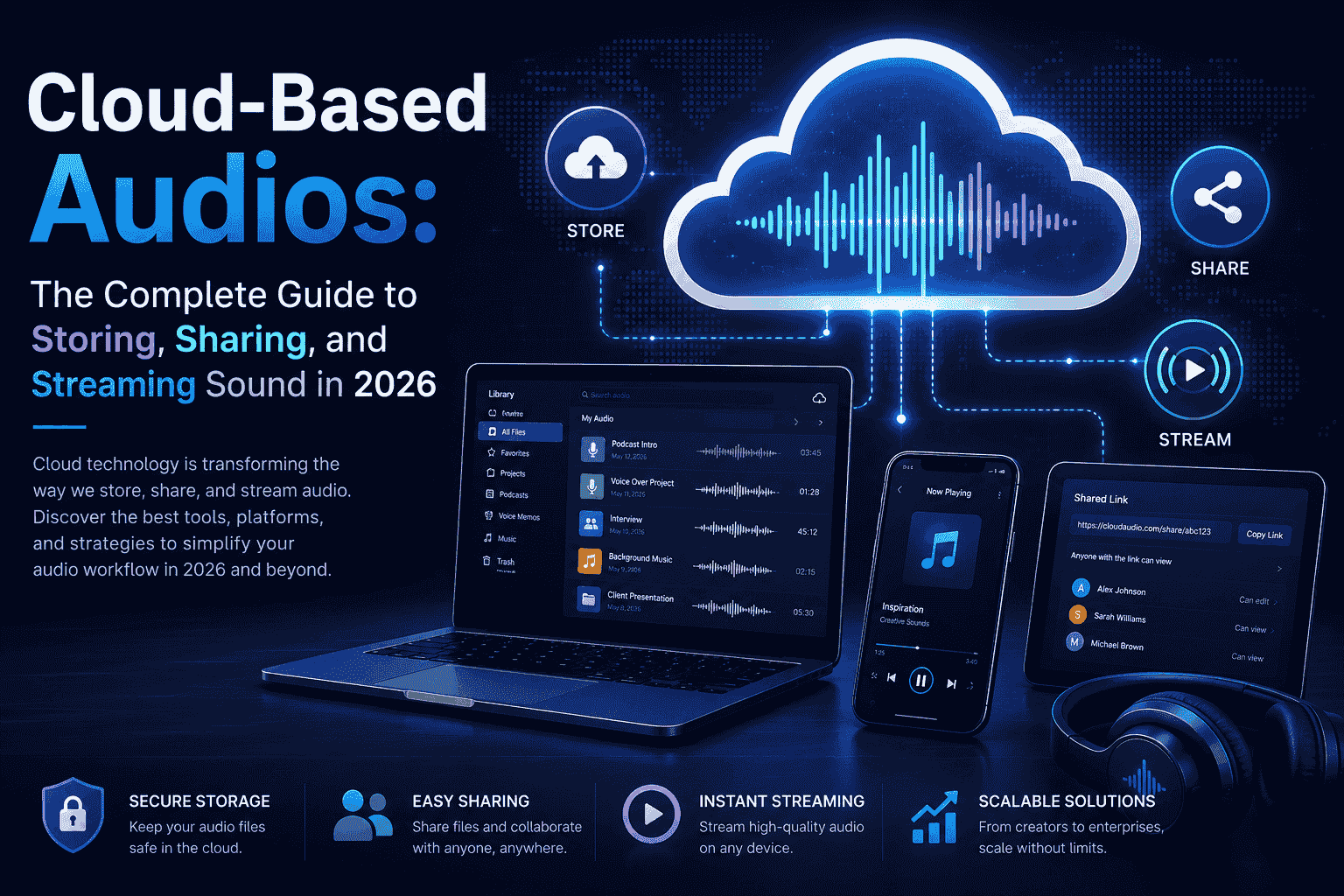
Remote work has made cloud-based audios almost essential rather than optional. Meetings get recorded and stored in shared folders so anyone who missed the call can catch up later. Voice messages replace long email threads because it is often faster to explain something out loud than to type it out.
Training materials, client calls, and internal updates all move through cloud-based audio systems now, tying distributed teams together in a way that feels almost as natural as being in the same office.
Cost Efficiency of Cloud-Based Audios
Storing audio locally might seem free at first glance, but the real cost shows up over time through hard drives, backup systems, and the labor needed to manage all of it. Cloud-based audios usually work on a subscription model, which means predictable monthly costs instead of surprise expenses when a hard drive fails or storage runs out.
For small businesses and independent creators, this predictability makes budgeting much simpler, and many platforms offer free tiers that are generous enough for casual use.
Common Myths About Cloud-Based Audios
There are a few myths worth clearing up. One is that cloud-based audios are always less private than local files, which is not true when you use a trusted provider with strong encryption. Another myth is that you always need a strong internet connection to use them, but many apps now let you download files for offline listening.
A third myth is that cloud storage is only for tech-savvy users, when in reality most platforms are designed to be as simple as tapping an upload button.
How to Choose the Right Cloud-Based Audios Platform
Choosing a platform comes down to matching the tool to your actual needs. If you are a podcaster, look for a platform built specifically for podcast hosting and distribution. If you are a business, look for team collaboration features and strong security controls.
If you are simply storing personal voice memos, a general cloud storage service like Google Drive or iCloud might be more than enough. Always check the storage limits, pricing tiers, and whether the platform allows easy export of your files if you ever decide to switch providers.
Future Trends in Cloud-Based Audios
Looking ahead, cloud-based audios are likely to become even smarter. Automatic transcription is already common, but expect more accurate real-time translation, better noise removal, and AI tools that can summarize long recordings into short highlights.
Voice search is also growing, and cloud-based audio platforms will likely become easier to search by spoken content rather than just file names. As more devices connect to the internet, from smart speakers to cars, cloud-based audios will keep expanding into new corners of daily life.
Tips to Get the Most Out of Cloud-Based Audios
A few simple habits can make a big difference. Name your files clearly so you can find them later without guessing. Organize recordings into folders by project, date, or client. Turn on automatic backup settings so nothing gets lost by accident. Review sharing permissions regularly, especially for sensitive recordings.
Finally, test playback on different devices to make sure your audience gets a smooth listening experience no matter where they access the file from.
Final Thoughts on Cloud-Based Audios
Cloud-based audios are not just a passing trend; they reflect how people actually want to work and communicate today. The ability to record once and access that sound from anywhere removes barriers that used to slow down creators, teams, and everyday users alike. As internet access continues to improve worldwide, the reach and usefulness of cloud-based audios will only grow.
Conclusion
Cloud-based audio has quietly become one of the most useful tools for anyone who works with sound, whether that means podcasts, business meetings, music, or simple voice notes. They offer flexibility, security, and cost savings that traditional storage methods struggle to match. By understanding how they work and choosing the right platform for your needs, you can make the most of what cloud-based audio has to offer, today and well into the future.