Introduction
A few years ago, setting up sound at home meant running wires, adjusting knobs, and hoping everything matched. Smart audio systems have changed that experience completely. Now you can control every speaker in your house with your voice, sync music across multiple rooms, and adjust sound settings without touching a single button.
This article looks at what smart audio systems actually are, why so many people are switching to them, and how to choose one that fits your life instead of just following a trend.
What Are Smart Audio Systems?
Smart audio systems are sound setups that connect to the internet or to each other wirelessly, allowing them to be controlled through apps, voice commands, or automation rules.
Unlike a traditional stereo system that only plays whatever is plugged into it, a smart audio system can stream music from the cloud, respond to spoken requests, and even adjust volume based on the time of day. The word “smart” here really means connected and responsive, rather than just loud or high quality.
Why People Are Switching to Smart Audio Systems
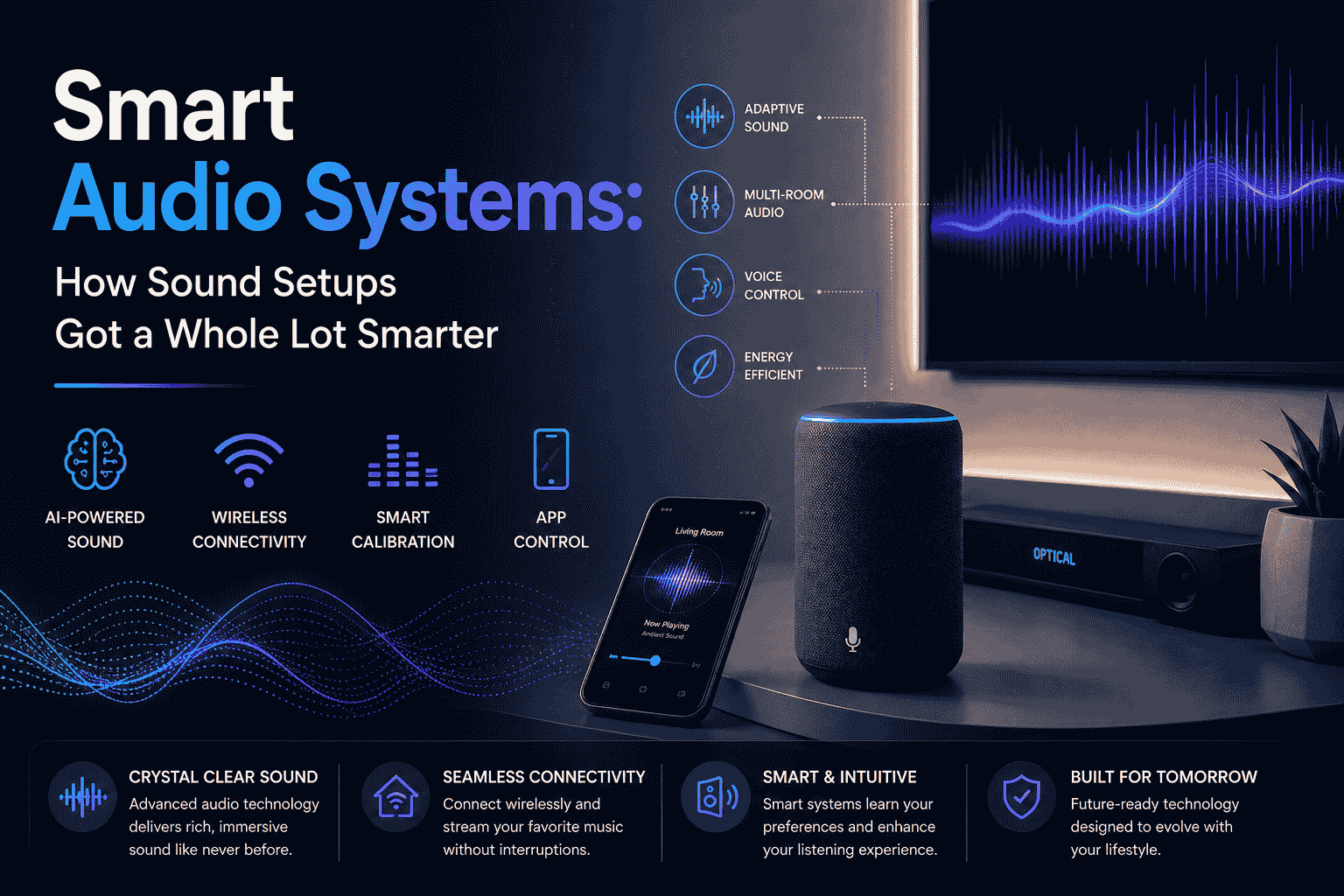
The main reason people move toward smart audio systems is simple convenience. Instead of digging through a stack of CDs or fumbling with cables, users can ask a speaker to play a song and have it start instantly.
Families with multiple rooms enjoy being able to sync the same song throughout the house or play different music in different spaces at the same time. As streaming services became the normal way to listen to music, smart audio systems became the natural way to control that streaming experience.
How Smart Audio Systems Actually Work
Behind the scenes, smart audio systems rely on Wi-Fi or Bluetooth to send sound data between devices. A central app or voice assistant sends commands to speakers, telling them what to play, how loud to be, and which room to activate.
Many systems also use small microphones built into the speakers themselves, allowing them to listen for wake words like “Hey” followed by the assistant’s name. Once triggered, the system processes the request, either on the device itself or through a connected server, and responds almost instantly.
Everyday Benefits of Smart Audio Systems
For most households, smart audio systems make daily routines a little smoother. Mornings can start with a voice command that plays the news or a favorite playlist while you get ready. Cooking becomes more enjoyable with hands-free music control when your hands are covered in flour or oil.
Parties become easier to manage since guests do not need to crowd around one phone to change the song. These small conveniences build up over time, making the technology feel less like a gadget and more like part of daily life.
Smart Audio Systems in Home Automation
Smart audio systems often act as the entry point into a much larger smart home setup. Many voice assistants built into these speakers can also control lights, thermostats, locks, and cameras, turning a simple speaker into a command center for the entire house.
This layered functionality is a big reason smart speakers have become one of the most popular smart home purchases, since they combine music, information, and home control into a single device.
Smart Audio Systems for Businesses and Public Spaces
Businesses use smart audio systems in ways that often go unnoticed by customers. Retail stores rely on centrally managed systems to update background music across multiple locations instantly, without needing anyone to physically visit each store.
Restaurants use similar setups to adjust volume automatically based on how busy the space gets. Offices use smart conference room audio that adjusts microphone sensitivity depending on how many people are speaking, making meetings clearer for everyone involved, including remote participants.
A Word on Privacy
Here is a short paragraph worth reading carefully: smart audio systems, especially ones with voice control, do collect some data to function properly, and understanding this is important before setting one up.
Most systems only record short clips after detecting a wake word, and reputable brands allow users to review, manage, or delete this data through a companion app. Taking a few minutes to check these privacy settings when first setting up a smart audio system is a small step that helps protect your household’s data long term.
Features That Make a Smart Audio System Worth Buying
Not every smart audio system offers the same value, so it helps to know what actually matters. Strong wireless range ensures speakers stay connected even in larger homes. Multi-room syncing lets you play the same song everywhere or different songs in different rooms.
Compatibility with your preferred voice assistant, whether that is Alexa, Google Assistant, or another option, can make daily use far smoother. Sound quality still matters too, so it is worth listening to a speaker in person or reading detailed reviews before committing.
Smart Audio Systems and Voice Assistants
Voice assistants are often the heart of a smart audio system, turning simple speakers into interactive tools. Instead of navigating menus or typing searches, users can just ask a question or give a command out loud.
This makes smart audio systems especially useful for people who find screens difficult to use, including older adults or those with visual impairments. As voice recognition technology keeps improving, these systems are becoming noticeably better at understanding natural speech rather than requiring exact phrases.
Common Misconceptions About Smart Audio Systems
A few misunderstandings tend to follow smart audio systems around. Some people believe these speakers are always listening and recording everything said nearby, when in reality most only activate after detecting a specific wake word.
Others assume a paid subscription is required to use them, though many systems work fine with free music options already available to users. There is also a belief that these systems are difficult to set up, when most modern smart audio systems can be ready to use within just a few minutes using a simple app.
How to Choose the Right Smart Audio System
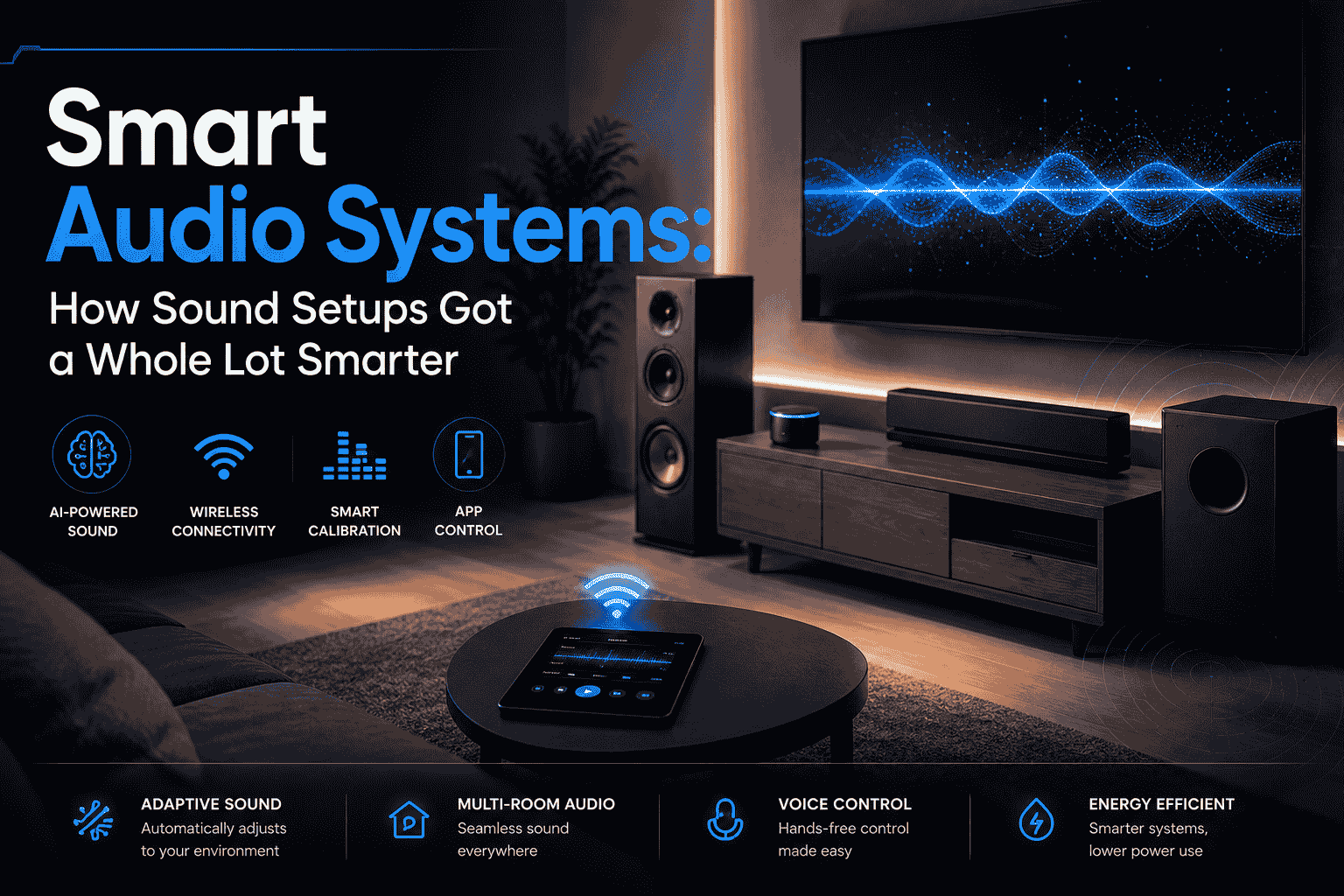
Choosing the right system depends on how you actually plan to use it day to day. If whole-home sound matters most, prioritize a system built around reliable multi-room syncing. If you mainly want convenience in one or two rooms, a simpler single speaker setup might be all you need.
Always check which voice assistants and streaming services a system supports before purchasing, since compatibility varies quite a bit between brands. Reading real customer reviews rather than relying only on marketing descriptions often reveals a much clearer picture of everyday performance.
Mistakes to Avoid With Smart Audio Systems
Many people run into unnecessary problems with smart audio systems simply by overlooking small details. Skipping software updates can lead to bugs, security gaps, or missing features that were meant to improve performance.
Placing speakers too far apart or behind thick walls can weaken signal strength and cause dropouts. Ignoring app permissions can also leave more personal data exposed than necessary. None of these issues are difficult to avoid, but they are easy to forget without a little attention.
The Future of Smart Audio Systems
Looking ahead, smart audio systems are expected to become even more personalized and predictive. Some systems already adjust volume automatically based on background noise or the number of people in a room.
Future versions may take this further, learning individual listening habits and adjusting settings without needing a spoken command at all. As artificial intelligence continues to advance, smart audio systems will likely become better at anticipating needs, offering a smoother and more natural experience overall.
Tips for Getting the Most Out of Your Smart Audio System
A few simple habits can make a noticeable difference in daily use. Keep device software updated to access the latest features and security improvements. Position speakers thoughtfully throughout your home to maintain strong signal quality.
Take time to group compatible devices together for a more unified listening experience. Periodically review connected apps and permissions to keep personal data protected. These small habits require little effort but consistently improve overall performance.
Final Thoughts on Smart Audio Systems
Smart audio systems have moved far beyond simple speakers that just play sound. They have become responsive, connected tools that adjust to voice commands, sync across entire homes, and quietly blend into daily routines.
This shift reflects a much larger movement toward smarter, more automated living, where convenience continues to reshape even the most ordinary parts of the day.
Conclusion
Smart audio systems continue to change how people listen, relax, and manage their homes, whether through a single speaker in a bedroom or a fully connected whole-house setup. Their real value comes not from flashy technology, but from the everyday convenience they consistently provide.
By understanding how these systems work and choosing one that genuinely fits your lifestyle, you can get lasting value from smart audio systems both now and as the technology continues to grow.